
Area Recovery Test – What You Need To Know About Cleanroom Performance Validation
Making sure that controlled environments like cleanrooms, operation theaters, laboratories and manufacturing areas have the level of air cleanliness is very important for safety, compliance and regulatory standards. The Area Recovery Test is a part of this validation process. It measures how well a space can get back to its condition after something contaminates it or after a particle challenge.
In this guide we will explain what the Area Recovery Test is, why it is important how it is done, its benefits and what professionals and facility managers should know about this validation requirement.
Yes, validation protocols are customized based on industry requirements, ISO classification levels, regulatory guidelines, and facility design. Each cleanroom is unique, so the validation process is tailored to ensure it meets the specific operational and compliance needs of the industry it serves.
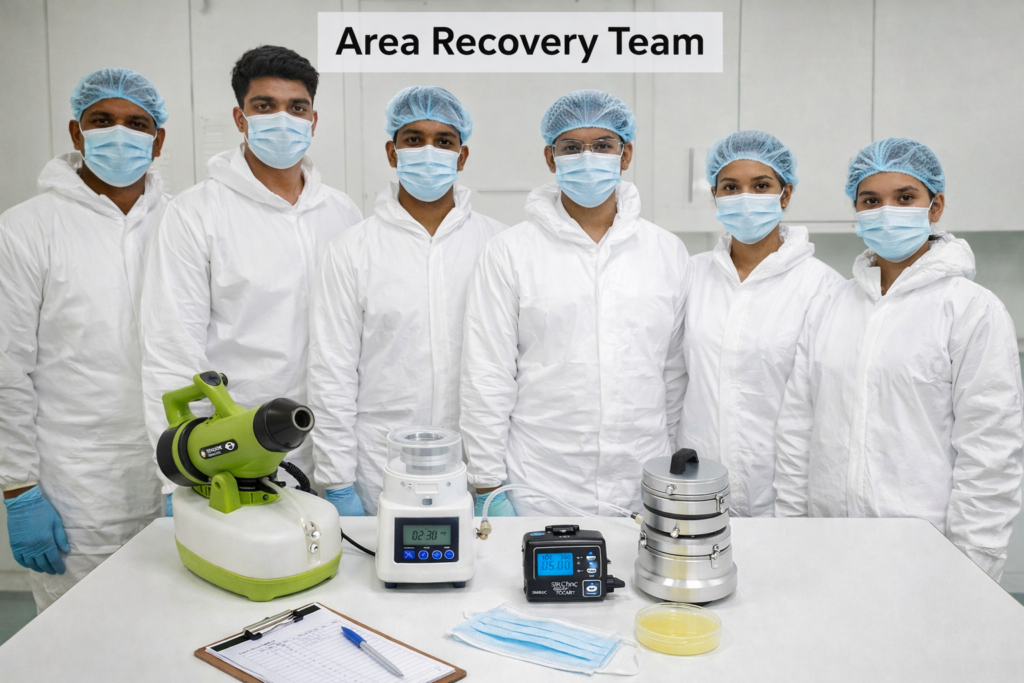
What Is The Area Recovery Test ?
The Area Recovery Test is a test that checks how well a cleanroom or critical area can get back to its state after being exposed to high levels of airborne particles or contaminants. This test is necessary for cleanroom validation and HVAC or air handling certification services. Companies like Clean Air Technology & Services in Pune offer these services.
What Does The Area Recovery Test Measure ?
- How long it takes for the area to get back to its specified clean class limits after a challenge event.
- How well the air handling units, filters and ventilation systems work to restore conditions.
- If the area meets the ISO 14644 standards and industry norms for controlled environments.
The test checks these things:
⦿ The time it takes to recover
⦿ The effectiveness of the air handling units and filters
⦿ Compliance with standards
Why Is The Area Recovery Test Important ?
The performance of a controlled environment is not about keeping particulate levels low when it is not being used. It must be able to recover after things like routine disturbances, maintenance activities, opening doors, moving equipment and temporary contamination events. Without a validated recovery capability critical environments might stay in a state for too long which can affect product quality, patient safety or process integrity. Key Standards Behind The Test
The Area Recovery Test follows guidelines from:
ISO 14644-1 -2 -3 for cleanroom classification and test methodology
EU GMP Annex 1 for sterile products
WHO and other regulatory frameworks for monitoring and clean environments.These references make sure that the test is scientifically sound and accepted globally.
The Area Recovery Test Fits In Cleanroom Validation
The Area Recovery Test is part of the cleanroom validation process. It is often done:
After Air Particle Count Tests Following Airflow and HVAC Performance Tests
During HEPA Filter Integrity Checks. Along with Room Pressurization and Temperature/Humidity Tests. This approach ensures that the environment meets cleanliness standards and can maintain them in conditions.
How The Area Recovery Test Is Done ?
The test follows a method to evaluate how well the controlled area restores its clean state. Although the exact protocols may vary the core steps are similar.
Step-By-Step Test Method
i. The typical test procedure includes:
- Initial Clean Condition Baseline: measuring and recording particle counts
- Controlled Contamination Challenge: raising particle concentration using an aerosol or fog generator
- Particle Monitoring: placing calibrated particle counters to monitor particle counts
- Activation of Systems: switching on air handling and filtration systems
- Recording Recovery Time: measuring the time taken to return to baseline cleanliness
ii. Documentation: recording all readings and conditions.
- What Are The Acceptance Criteria
- Acceptance criteria help determine if the area has passed the recovery requirements. These criteria include:
- Recovery within a number of minutes
- Consistent results across sampling points
- Repeatability between test runs. If the performance is not acceptable corrective actions may be needed.
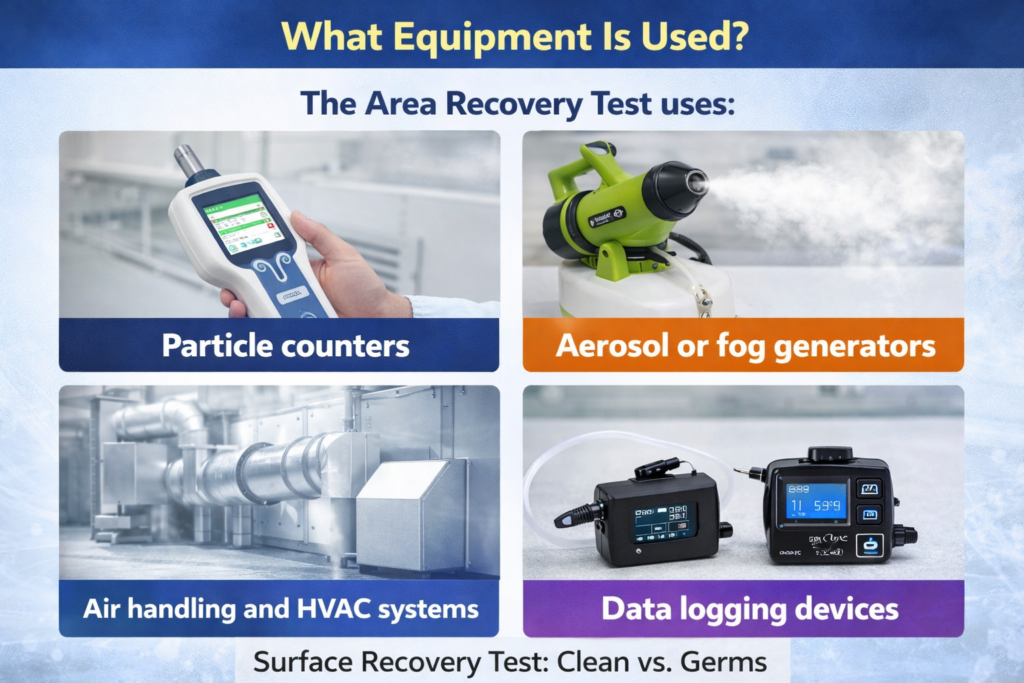
What Equipment Is Used ?
- Particle counters
- Aerosol or fog generators
- Air handling and HVAC systems
- Data logging devices
Calibration certificates. This equipment ensures test integrity and reliability.
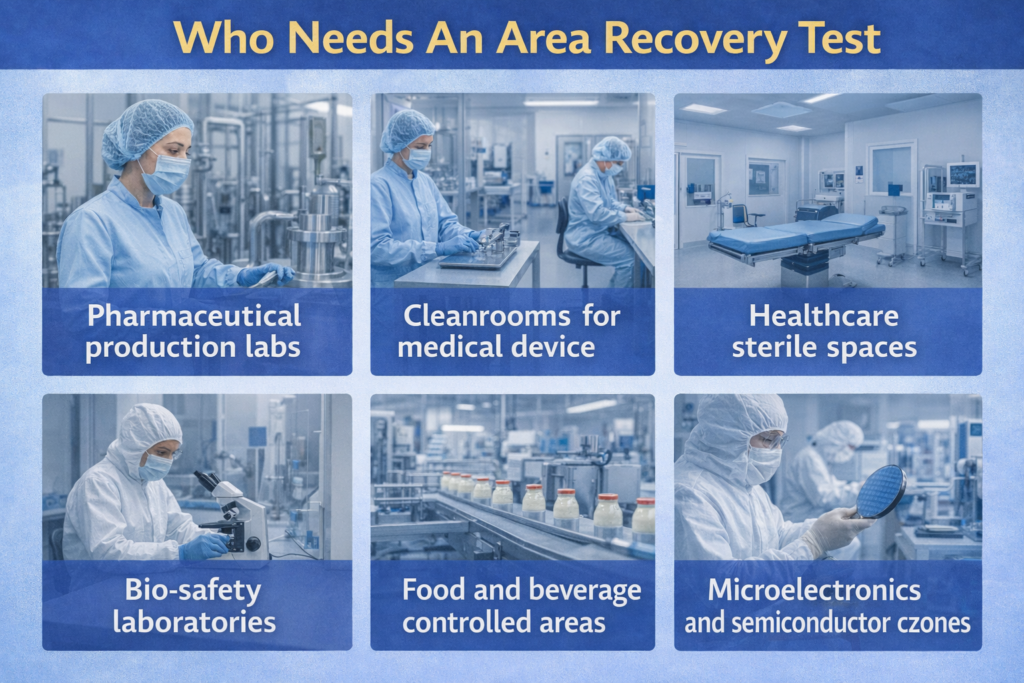
Who Needs An Area Recovery Test ?
Area Recovery Tests are crucial for environments where contamination control’s essential, such as:
Lorem ipsum dolor sit amet, consectetur adipiscing elit. Ut elit tellus, luctus nec ullamcorper mattis, pulvinar dapibus leo.
- Pharmaceutical production labs
- Cleanrooms for medical device manufacturing
- Healthcare sterile spaces
- Bio-safety laboratories
- Food and beverage controlled areas
- Microelectronics and semiconductor clean zones.
These environments cannot compromise on cleanliness.
Benefits Of The Area Recovery Test
The test provides:
- Assurance of system performance
- compliance
- Improved safety and quality
- Documentation for audits.
- Common Misconceptions
Some people think that the Area Recovery Test is a particle count test but it measures restoration over time. It is not a one-time test. Rather a periodic re-validation. The focus is on performance after disturbance, not static conditions.
How Often Should The Test Be Done ?
- The frequency of the test varies by industry and regulatory guidance. It is often done:
- After installation or commissioning
- After major system changes
- At defined periodic intervals
- After failures or deviations in air quality performance. Re-testing ensures compliance.
Common Challenges
Inaccurate sampling, calibration errors, environmental fluctuations and complex airflow patterns can affect test results. Professional teams ensure setup and execution for reliable results
- Area Recovery Test Vs Other Validation Tests
The Area Recovery Test is different from environmental checks. It measures recovery over time while other tests measure cleanliness or airflow patterns.
- Air Particle Count Vs Area Recovery Test
The Air Particle Count Test measures particle levels while the Area Recovery Test evaluates recovery performance.
- Airflow Visualization Vs Area Recovery Test
Airflow pattern tests show how air moves while the Area Recovery Test focuses on restoring conditions.
- HEPA Integrity Vs Area Recovery Test
HEPA integrity tests show filter efficiency while the Area Recovery Test assesses system performance.
- When Combined – A Full Validation Picture
Together these tests ensure that controlled environments are clean, compliant and capable of sustaining required conditions.
Frequently Asked Questions
Q1: What is an Area Recovery Test ?
The Area Recovery Test measures how quickly a controlled area returns to its cleanliness levels after a challenge.
Q2: Why is this test important ?
It ensures that filtration, ventilation and airflow systems can quickly restore conditions.
Q3: How long does the test take ?
The test duration varies. Recovery criteria often require results within tens of minutes.
Q4: Is the test required by standards ?
Yes, ISO 14644 and many GMP norms reference recovery capabilities.
Q5: Can the test be done in any room ?
No, the test is not meant for just any ordinary room.