
Duct Leakage Test – Complete Guide to HVAC System Efficiency & Compliance
In any HVAC system air ducts play a role in distributing conditioned air throughout a building.
Whether it is a hospital, pharmaceutical cleanroom, commercial building or industrial facility proper duct performance directly affects air quality, energy efficiency and regulatory compliance.
One of the important methods to evaluate duct performance is the Duct Leakage Test .
This test helps determine whether air is escaping from the duct system and whether the installation meets industry standards.
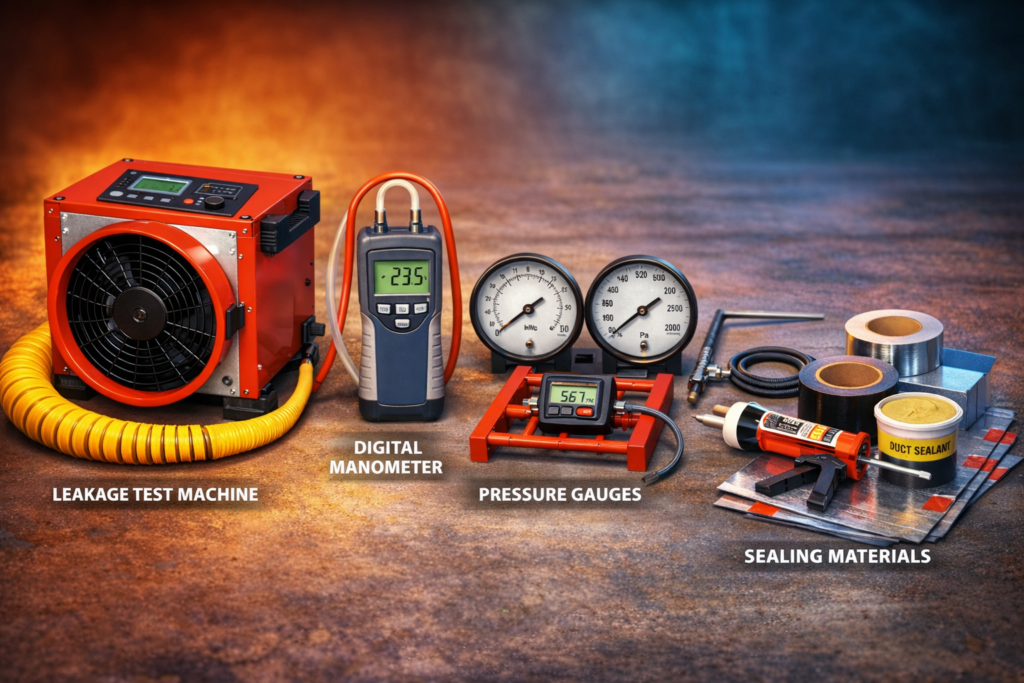
Equipment Used in Duct Leakage Test
The test requires calibrated instruments such as:
- Leakage test machine
- Digital manometer
- Pressure gauges
- Sealing materials
In this guide we will explain:
- What a Duct Leakage Test
- Why it is important
- How it is performed
- Acceptance criteria
- Benefits and common challenges
- Frequently asked questions
Understanding the Duct Leakage Test
A Duct Leakage Test is a quality and performance assessment method used to measure air leakage in HVAC duct systems.
In words it checks how much air is escaping from the ducts before reaching its intended destination.
Duct Leakage Test is important because duct leakage can reduce system efficiency, increase energy costs and create pressure imbalance issues.
In environments such as cleanrooms and hospitals leakage can even compromise safety.
Why Duct Leakage Happens
Leakage in duct systems can occur due to:
- Poor joint sealing
- Damaged duct panels
- Loose fittings
- Aging materials
- Poor-quality gaskets
Impact of Duct Leakage
If leakage is not controlled it may lead to:
- Increased energy consumption
- Uneven. Heating
- Reduced airflow at outlets
- Difficulty maintaining pressure differentials
- Increased HVAC load
- Contamination risk in controlled environments
Where the Duct Leakage Test Is Required
The test is commonly required in:
- Pharmaceutical facilities
- Cleanrooms
- Hospitals and operation theatres
- Commercial office buildings
- Industrial HVAC installations
- Data centers
Standards Governing Duct Leakage Test
The test generally follows standards such as:
- SMACNA
- DW/143
- ASHRAE guidelines
- ISO cleanroom-related references
Purpose of Conducting a LEAKAGE TEST
The primary objective of a Duct Leakage Test is to ensure that the duct system performs as designed.
The key goals include:
- Measuring leakage quantity
- Verifying sealing quality
- Ensuring compliance with project specifications
- Improving HVAC efficiency
- Reducing costs
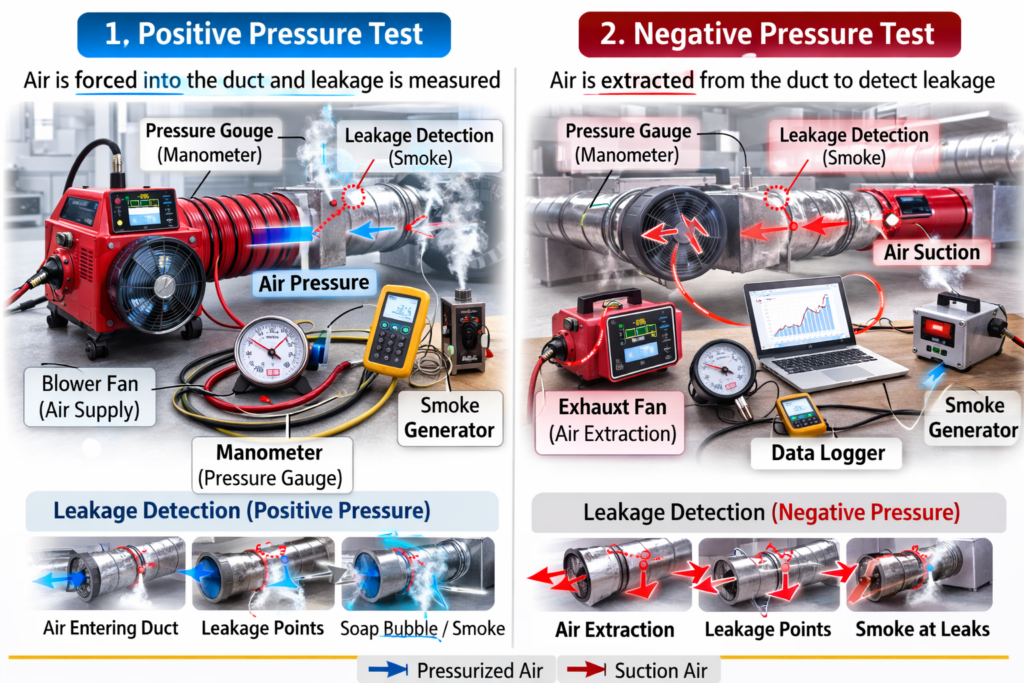
Types of Duct Leakage Test
There are generally two types of LEAKAGE TEST methods :
- Positive Pressure Test.
Air is forced into the duct and leakage is measured.
2. Negative Pressure Test.
Air is extracted from the duct system to detect leakage.
When Should a Duct Leakage Test ?
The test is usually conducted:
- Before system commissioning
- After duct installation
- After repair or modification
- During validation
- When airflow issues are suspected
Procedure of Duct Leakage Test
The Duct Leakage Test follows a controlled procedure.
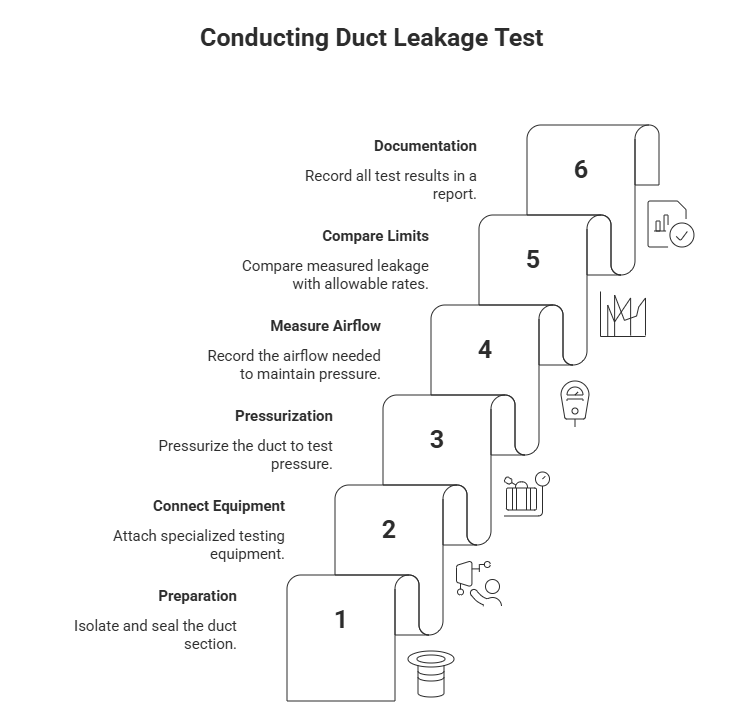
Step-by-Step Duct Leakage Test Process
- Preparation. Isolate the duct section, seal all openings, block diffusers and grills and ensure all access panels are closed.
- Connect Test Equipment. Specialized leakage testing equipment is connected to the duct section.
- Pressurization. The duct is pressurized to a test pressure according to design standards.
- Measure Airflow. The airflow required to maintain test pressure is measured. This airflow represents leakage.
- Compare With Allowable Limits. Measured leakage’s compared with permissible leakage rates as per standard.
- Documentation. All readings, pressure values and leakage results are recorded in a report.
Acceptance Criteria for Duct Leakage Test
Acceptance depends on:
- Duct pressure class
- Surface area of duct tested
- Project specification
Common Challenges in Duct Leakage Test
Some challenges include:
- Large duct sections difficult to isolate
- Access limitations
- High-pressure systems
- Incomplete sealing
Benefits of Performing a LEAKAGE TEST
Conducting a Duct Leakage Test offers several benefits:
- Improved Energy Efficiency. Reduces air loss and lowers electricity consumption.
- Better Air Distribution. Ensures designed airflow reaches occupied areas.
- Regulatory Compliance. Meets required. Audit requirements.
- Cost Savings. Prevents term operational losses.
- Enhanced Indoor Air Quality. Reduces contamination risks.
Duct Leakage Test vs Other HVAC Tests
i. Airflow Test vs Duct Leakage Test
- Airflow Test
Airflow testing measures volume at outlets.
- Duct Leakage Test
Duct Leakage Test measures air loss within the duct system.
ii. HEPA Integrity Test vs Duct Leakage Test
- HEPA Integrity Test
HEPA testing checks filter efficiency.
- Duct Leakage Test
Duct Leakage Test checks duct sealing performance.
iii. Room Pressure Test vs Duct Leakage Test
- Room Pressure Test
Room pressure testing ensures pressure differential.
- Duct Leakage Test
Duct Leakage Test ensures air is not leaking before reaching the room.
Industries That Require LEAKAGE TEST
Industries where this test is critical:
- Pharmaceutical manufacturing
- Biotechnology facilities
- Cleanroom environments
- Hospitals and healthcare
- Commercial complexes
- Industrial plants
- Laboratories
Common Signs You Need a Leakage Test
- High energy bills
- Weak airflow at diffusers
- Difficulty maintaining pressure
- Unusual noise in ducts
- HVAC system overloading
Maintenance and Re-Testing
Inspection and periodic Duct Leakage Test help ensure continued compliance, efficient HVAC operation and long-term performance.
Why Professional Execution Matters
- A Duct Leakage Test must be conducted by trained professionals because incorrect pressure settings can damage ducts improper calculations give results and documentation must meet audit standards.
- A Duct Leakage Test is a quality assurance procedure for HVAC systems. It ensures that air is delivered efficiently in compliance with standards.
Frequently Asked Questions
Q1: What is a Duct Leakage Test ?
A Duct Leakage Test measures how air leaks from HVAC duct systems under test pressure conditions.
Q2: Why is a Duct Leakage Test important?
It ensures energy efficiency, airflow accuracy and regulatory compliance.
Q3: When should a Duct Leakage Test be done?
Before commissioning after installation or, after repairs.
Q4: What happens if the system fails the LEAKAGE TEST?
If the system fails the DUCT LEAKAGE TEST, it means the measured air leakage is higher than the acceptable limit defined by the applicable standard or project specification.